Emily - Wayfarer of the Mind
Books, wings, and precarious steps with Emily Dickinson
This is my letter to the world,
That never wrote to me, —
The simple news that Nature told,
With tender majesty.
Her message is committed
To hands I cannot see;
For love of her, sweet countrymen,
Judge tenderly of me!
–The Collected Poems of Emily Dickinson, p. 5
After months of reading two or three pages of poems a day, I finally finished
The Collected Poems of Emily Dickinson
on July 24, 2026. This collection contains 325 pages of her poetry; during her lifetime, she wrote nearly 1,800 poems.
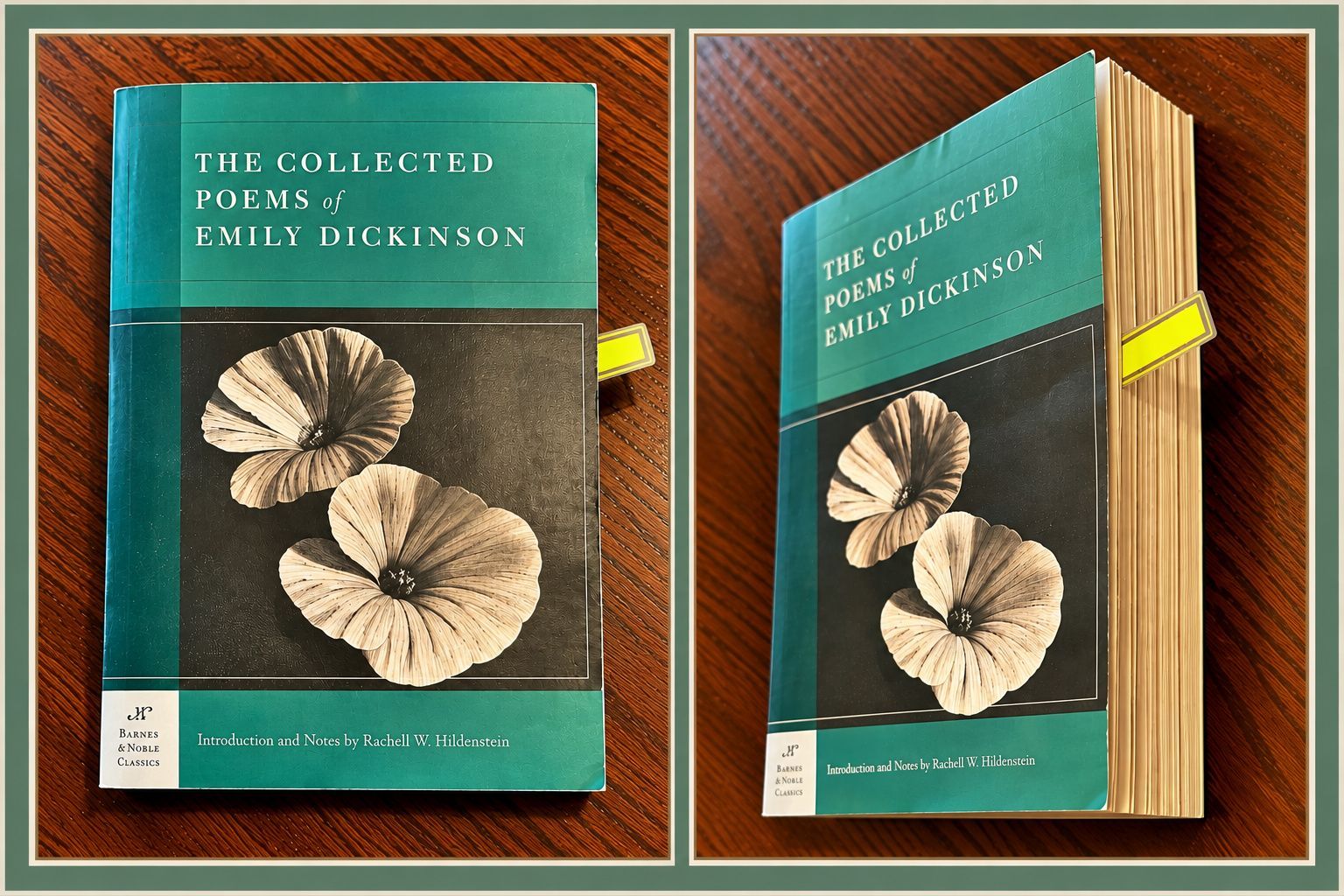
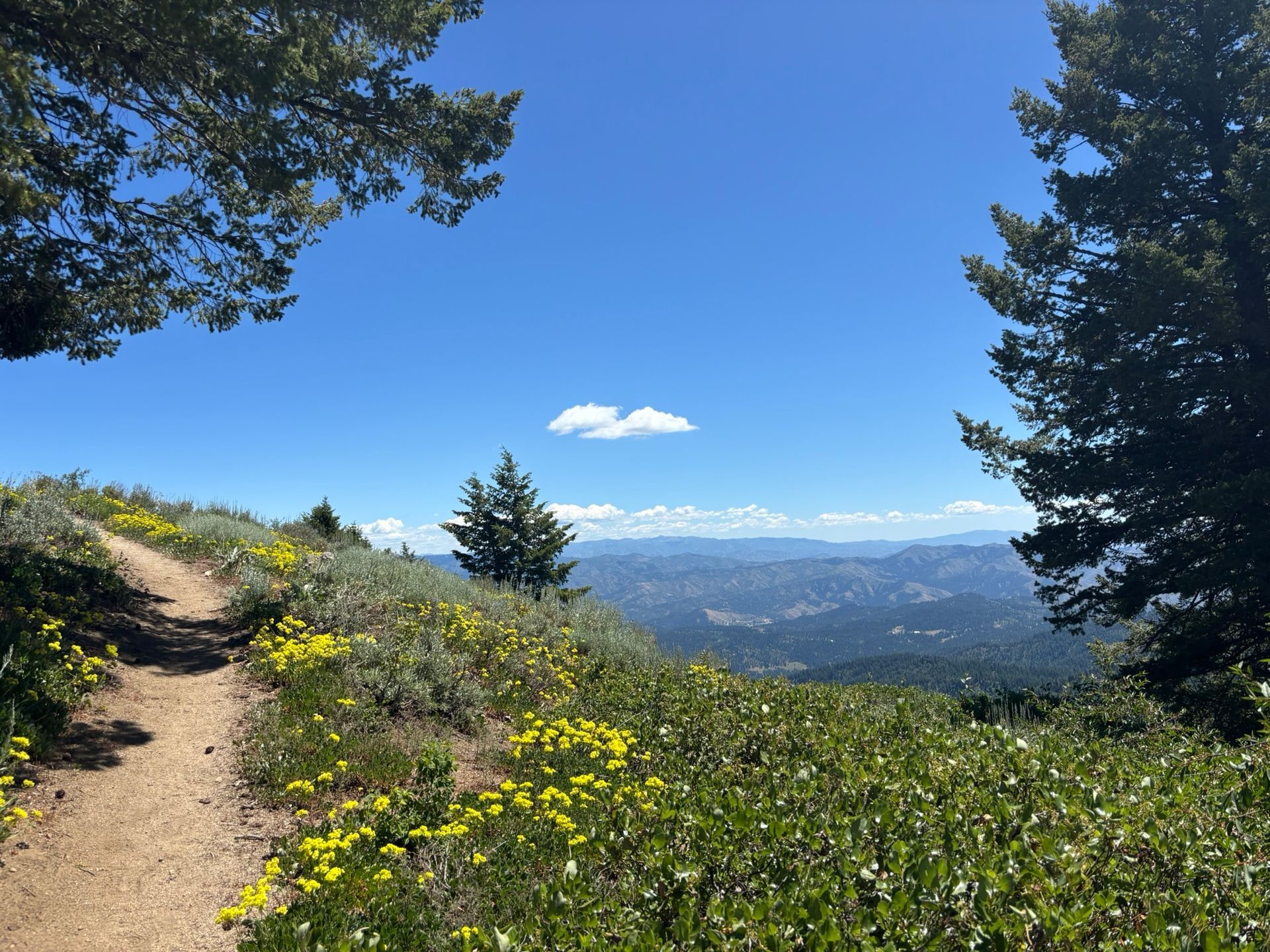
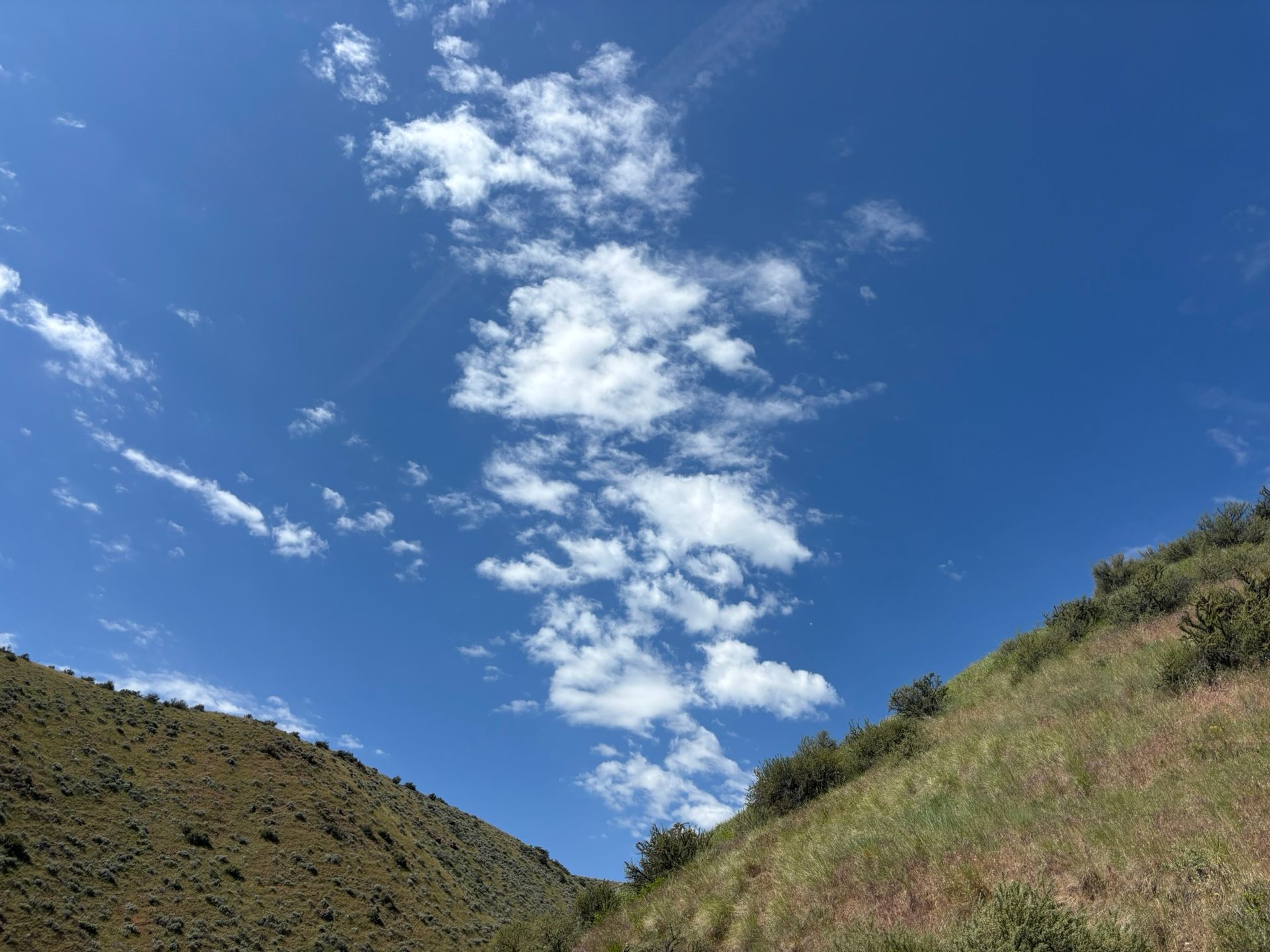
Photographs by Michael Kroth
Before, I was familiar with perhaps a dozen of her most quoted poems. During, so many touched me that no used bookstore or Friends of the Library would ever accept my highlighted copy, so marked up. After, I’m nonplussed—the treasure chest is so grand that I’m not sure how to select this gem or that for further attention.
I’m not an expert on Emily Dickinson or poetry, but I am an expert on my experience of reading her poems.
Read at least a little bit every day
I’ve found that one good way of completing something as vast as this collection is to read just a bit every possible day. Once I settle into that rhythm, the pages accumulate, and sooner than I expect, the volume is finished. Right now, I’m almost done reading Thomas à Kempis’ classic,
The Imitation of Christ, for the third time, and I’m beginning a collection of poetry by T. S. Eliot. Eliot’s poems tend to be longer and, for me anyway, denser and harder than Emily’s, though I’m already finding gems.
Spread the Word(s)
What I’ve found—and it is surely a lack of discipline—is that while I read a good deal, I often do a poor job of harvesting those fruits and veggies for my own learning. I rarely spread this splendid, nutritive word charcuterie for others to taste and digest. I usually jump right into another entertaining, meaningful, ‘most always educative book or chapter or article, light or hefty.
Typically, I put what I’ve read to practical use by pulling ideas or quotations for something else I’m working on. Less immediately practical, but just as important, are the deeper perspective and wider knowledge I’ve internalized and can draw upon. Still, I miss opportunities to share the book proper with others.
Henceforth, I’ll share thoughts about some of these books as I ingest them.
Three Wayfaring Poems from Emily
For now, here are three poems which illustrate why I look at Emily Dickinson as an adventurer.
She was born December 10, 1830, in Amherst, Massachusetts, and lived in that town for most of her life. She did not travel the world, yet within her mind and heart—I propose—lay a wayfaring soul.
I’m developing a taxonomy—a way of thinking about wayfaring more comprehensively than just taking off on any old journey, as fun as that would be. Categorizing sounds boring, but it’s fascinating to consider how inclusive wayfaring is. It’s available to people without the time, money, or health to walk a 500-mile pilgrimage. Any of us can be—and all of us are, to some degree—wayfarers.
One way of considering wayfaring is its physical scope. We can be wayfarers in our minds through imagination, dreaming, planning, anticipating—you get the idea. We can also wayfare where we live. In our own room, abode, neighborhood. Then around town, across the state or country, around the world—and, for just a few, into space.
Another dimension is how we travel: thinking, remembering, reading, writing, discussing, creating, walking, hiking, flying, sailing. And there are many reasons we wander: curiosity, wonder, enjoyment, adventure, escape, fear, healing, companionship, renewal.
The literature about walking and traveling is as humongous as it is delightful. As varied as it is profound. Authors range from Steinbeck to Solnit, Thoreau to Kerouac. Fiction and nonfiction carry our imaginations far and wide; metaphor opens possibilities we might otherwise never consider.
What does it mean to be a wayfarer of the mind? Emily’s poems give us somewhere to begin. Two concern books; the third takes us “plank to plank.”

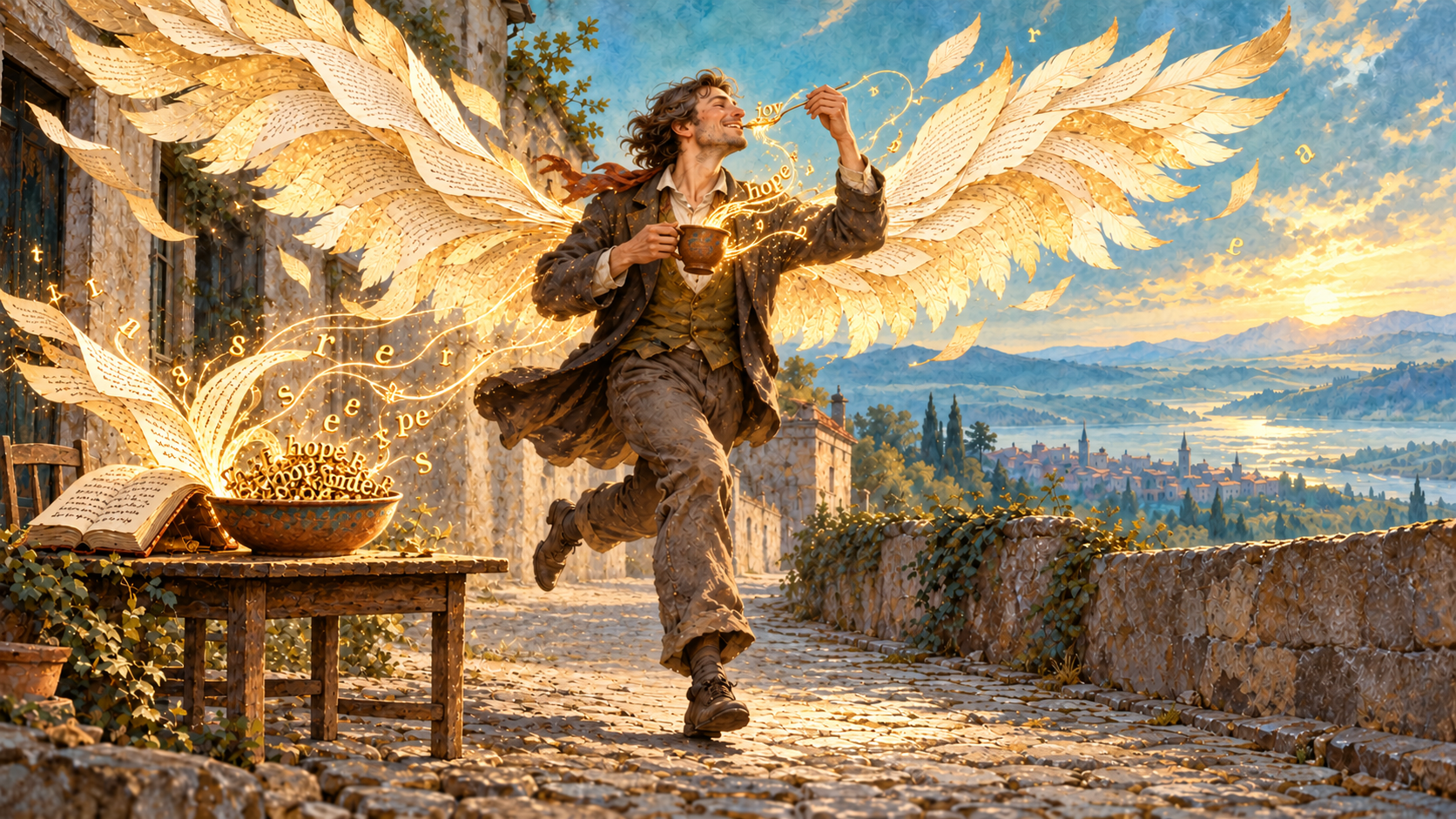
Illustrations generated with ChatGPT (OpenAI), with concepts, direction, and revisions by Michael Kroth.
"There is no frigate like a book"
There is no frigate like a book
To take us lands away,
Nor any coursers like a page
Of prancing poetry.
The traverse may the poorest take
Without oppress of toll;
How frugal is the chariot
That bears a human soul! (pp. 57-58)
Emily gives us a book as a frigate, carrying us far from home. She adds coursers—swift horses—and a chariot to her fleet of imaginative transportation. Books, she suggests, offer an affordable way to adventure far and wide, carrying the “human soul.”
Books and poetry and theater and music and essays and visual art—and, these days, documentaries, movies, and television series—can take us on imaginary journeys. We can place ourselves beside Indiana Jones or Phileas Fogg, Eliza Doolittle or David facing Goliath.
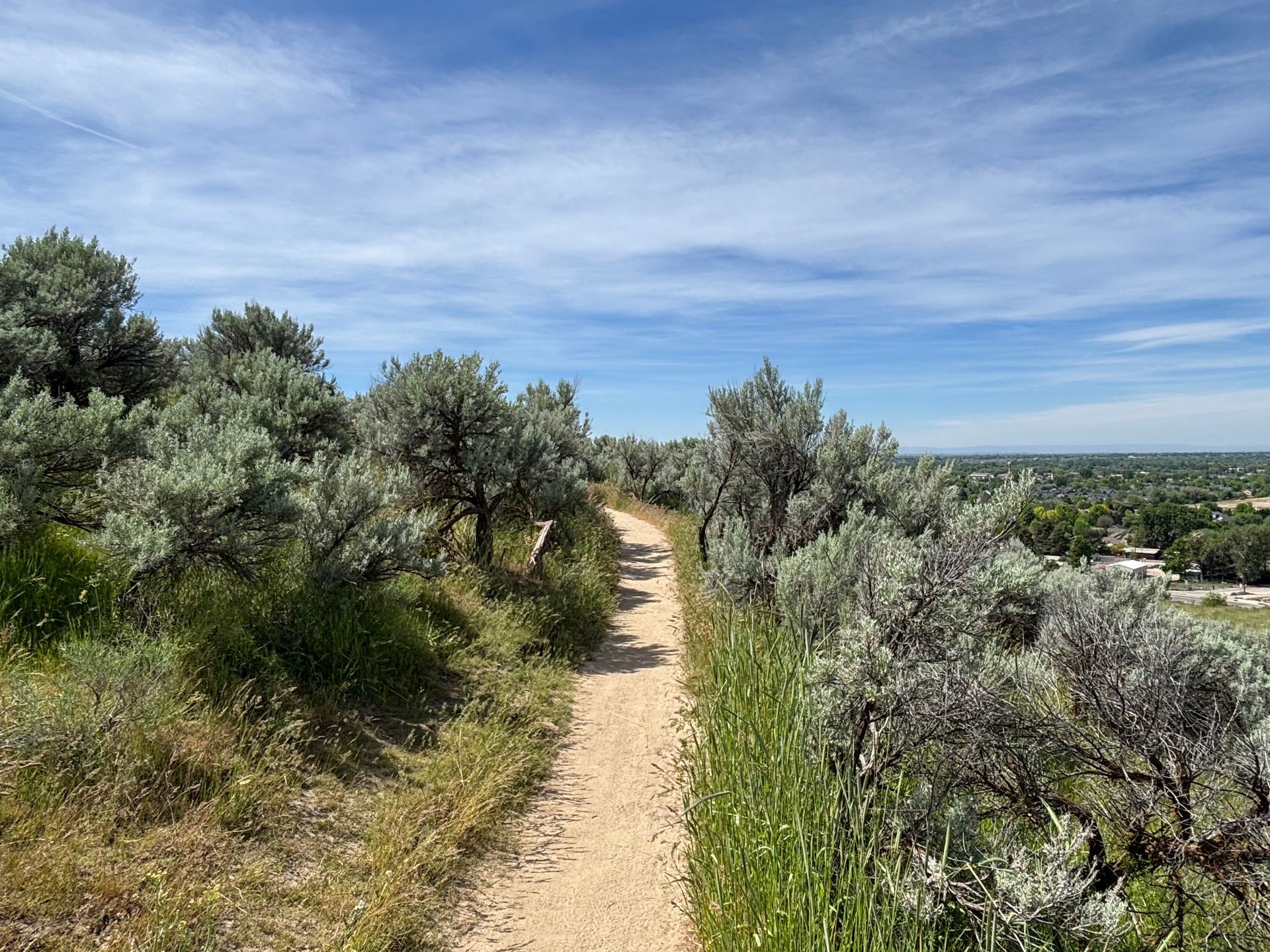
We watched the movie Tenzing this week, about the first successful ascent of Mt. Everest. While I couldn’t imagine myself on that actual climb, I could feel the hope, fear, courage, disappointment, and challenge of the climbers. I could connect something of that test, that willpower, to my own much smaller successes when finishing a difficult trail in the Boise foothills for the first time.
We have the capacity for wayfaring while resting in our La-Z-Boy. While our bodies rest, our minds can be richly active, traveling through worlds already discovered, yet to be discovered, or existing only in our imaginations.
Emily also explores the power of books in this poem, which I’ve written about before.
"This bequest of wings was but a book"
He ate and drank the precious words,
His spirit grew robust;
He knew no more that he was poor,
Nor that his frame was dust.
He danced along the dingy days,
And this bequest of wings
Was but a book. What liberty
A loosened spirit brings! (p. 17)
Emily gives our relationship with books wings. Movement. Even dancing. “He danced along the dingy days,” she writes—what a description of the freedom reading can bring!
In our illustration, this gentleman is literally eating a word salad. Words nourish him; the book’s pages become wings that lift him up. He seems too old to be a fledgling, yet here he is, newly winged, spreading his mighty pinions. His feet barely touch the ground. Is he running, or preparing for a tour jeté? A Baryshnikovian leap? Swoosh, swoosh, swoosh. The loosened spirit takes flight.
This is the kind of literary nourishment I worry I haven’t harvested. Haven’t put on the communal dinner table. Haven’t fully digested.
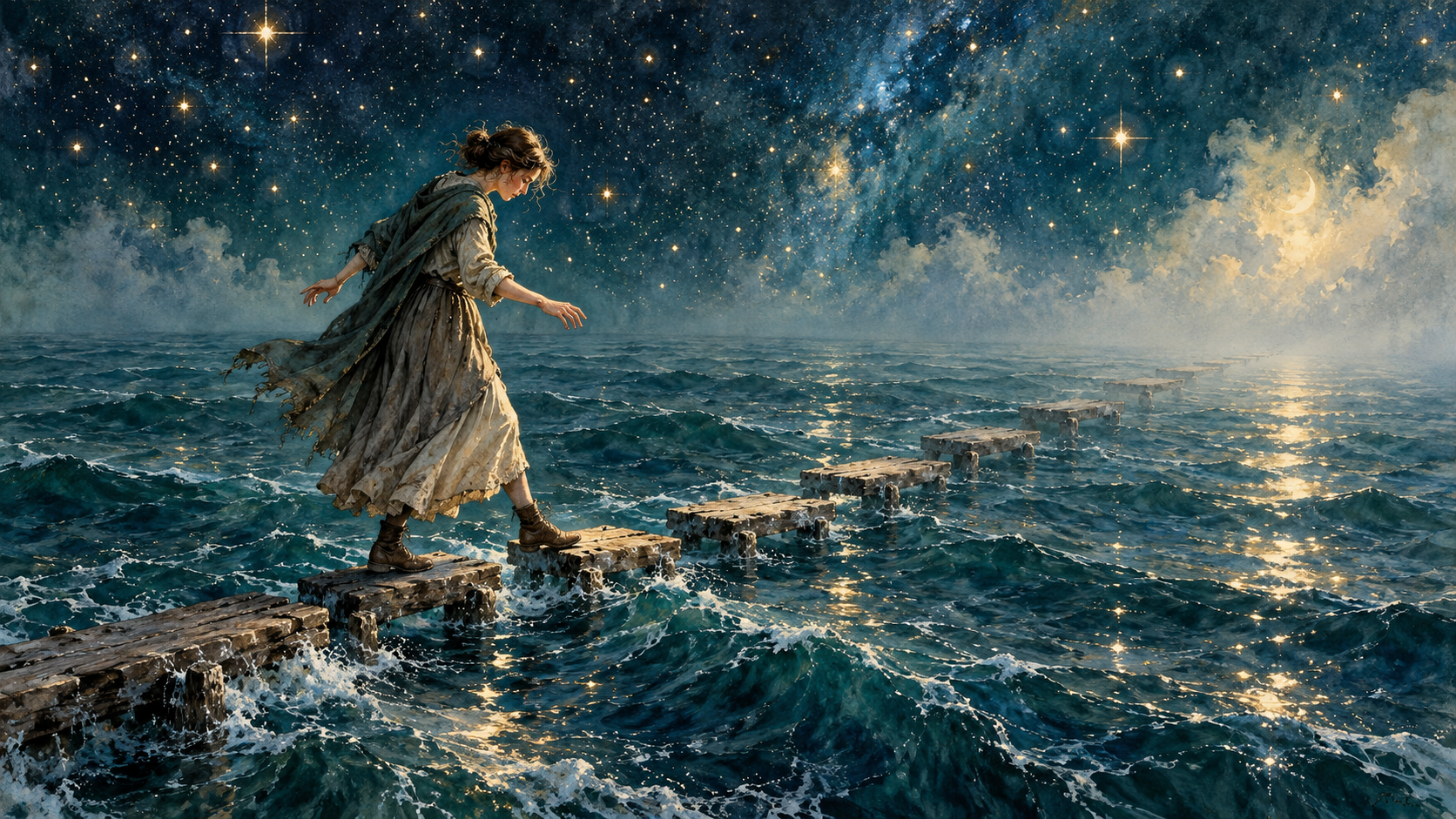
"This gave me that precarious gait / Some call experience"
I stepped from plank to plank
So slow and cautiously;
The stars about my head I felt
About my feet the sea.
I knew not but the next
Would be my final inch,—
This gave me that precarious gait
Some call experience. (pp. 74-75)
Experience is our master teacher. We try and fall, touch and get burned, sing loudly but off-key, write a predictable poem. Experience gives us plenty of learning opportunities, some more welcome than others.
Here, Emily gives experience a “precarious gait.” Her speaker moves plank to plank, uncertain whether the next step will be the last. In our illustration, clouds and darkness obscure the destination. The sea waits below. Still, she moves forward.
Unlike the first two poems, this one doesn’t explicitly concern reading. I’ve made it part of this traveling trio because a journey of the mind can also unsettle us. A book may challenge an assumption or leave a familiar certainty less secure. We proceed, but perhaps with a more “precarious gait.”
I remember how gobsmacked I was when reading the Mists of Avalon. The story of Camelot from women’s perspectives turned my head around, joyously and mysteriously. There was, after all, Avalon to consider…. This version of the tale opened my mind to possibilities I had never considered before. I was less certain after that, more sensitive to ways-of-looking.
We can feel something of this inner adventuring without taking a physical step. A poet imagines a meeting with King Arthur; a sculptor gives form to a battle never witnessed; a songwriter creates a character whose grief is unlike their own. Imagination draws on what we know and ventures into what we don’t. The encounter is imagined; the feeling, questioning, and learning can be real.
This, too, is wayfaring.
This is the Emily Dickinson I linked arms with in these three poems—a wandering, wayfaring soul.
This is the Emily Dickinson I linked arms with in these three poems—a wandering, wayfaring soul.