A Cry for Restoration
It takes just a second to break something.
Restoring what was broken takes time.
From Lamentations—words spoken by a people in exile:
“Restore us to yourself, O Lord,
that we may be restored.”
Last year we had a problem in our house.
Our water heater began to leak—not all at once, but slowly, quietly, inside the wall behind it. It was the kind of leak you don’t notice right away.
Until you do.
And what struck me most in the days that followed was not the damage itself—but how long restoration takes.
- It’s not immediate.
- It’s not clean.
- It’s MESSY and EXPENSIVE!
- It’s not simple.
Even for this relatively small project.
This wasn’t something I could do myself, so I watched the experts open the wall, remove the damage, then set up the drying out (and drying, drying, drying while I twiddled my fingers), until they could finally begin to rebuild.
We’ve seen how easy it is to break things.
We’ve seen wars of choice and wars we didn’t choose. Fate, accident, intention.
We’ve seen systems and norms and ways of doing things tossed aside without a second thought, and we’ve seen them broken after considerable thought, because they were already broken. We’ve seen long term relationships with trusted allies or supporters intentionally degraded. Fate, accident, intention.
It’s easy to cut, it’s much harder to heal.
To me, that is a lesson that we should always take care, think of all the consequences - good or bad, and break the status quo only after deep deliberation.
And these days, unlike the days when my grandmother would darn and redarn our socks until there just wasn’t any sock left, these are days where people are more likely to just patch things over, to simply put a coat of paint on top of the rust, and then to move on. Instant results, no worrying about the long term deficit or the pay me now or pay me later kicking the ball down the field costs to our environment of climate change. But there will be a payment later. For sure.
Things break.
And sometimes we feel it closer to home—in our personal relationships,
in our health, in our work, in our families and friends.
It only takes a moment for something to break. It doesn’t take much—sometimes just a word spoken too quickly, a silence held too long, or a fracture that forms between people.
And rebuilding trust and health and all those matters that are important to us takes a long time, sometimes forever.
I remember many years ago when my grandmother passed.
She lived in the little town of Winfield, Kansas where my parents met and fell in love. We had gathered to help my mom clean out her home. Some of you may know that Kansas is well known for tornados and, sure enough, one evening around dusk we were in the motel where we were staying and, you guessed it, heard a crazy wind outside.
I can’t remember now if we’d been warned it was coming (this was in the days before cell phones and AccuWeather), but this wind lasted just a short time—minutes—and then it was gone.
We didn’t think much of it until we walked outside.
There, the streets were strewn with broken trees and branches.
I don’t know the extent of the damage, but it was at that point, through no fault of their own, that the good citizens of Winfield had to begin restoring their town. And in a place like that, I’m sure they’d been through it before.
Sometimes, though, we have to restorewhat we have caused to break.
Sometimes, like the sign in a store packed with fragile goods says, “If you break it, you own it.” And it really doesn’t matter if it was an accident or not.
And sometimes we have to restore what we have intentionally broken—things we chose to break, for whatever reason.
Regardless of fate, accident, or intention, something has come apart.
We can try to fix it or decide to let it go.
But if we choose restoration—whether it’s a relationship, an organization, a system, or something within ourselves—we can bet on one thing:
It will never be exactly what it was.
It will be different.
And this is where the season of Lent meets us.
Lent is not about quick fixes. It is a slow uncovering—being aware of what is messy-ing our lives, and letting some of that mess go so we are ready for what’s coming and our purpose moving forward.. It is a drying-out time. It’s the lacuna between what is and what will be.
Resurrection is not a return to what was.
It is something transformed.
Kintsugi
In Japanese aesthetics, there is an art form called kintsugi.
When a ceramic bowl breaks, it is repaired with lacquer mixed with gold.
- The cracks are not hidden.
- They are featured.
- And in many cases, the piece is considered more beautiful—not despite the break, but because of it.
Underlying this practice is a broader philosophy known as wabi-sabi—the acceptance that life is incomplete, imperfect, and always in process.
Healing, too, is not instant. It requires time. It requires the right conditions—honesty, humility, sometimes silence. It unfolds in layers. And when it is real, it does not erase the past. It integrates it.
The cracks we can try to hide away, but often remain visible.
But they are no longer simply signs of damage. They become part of the story.
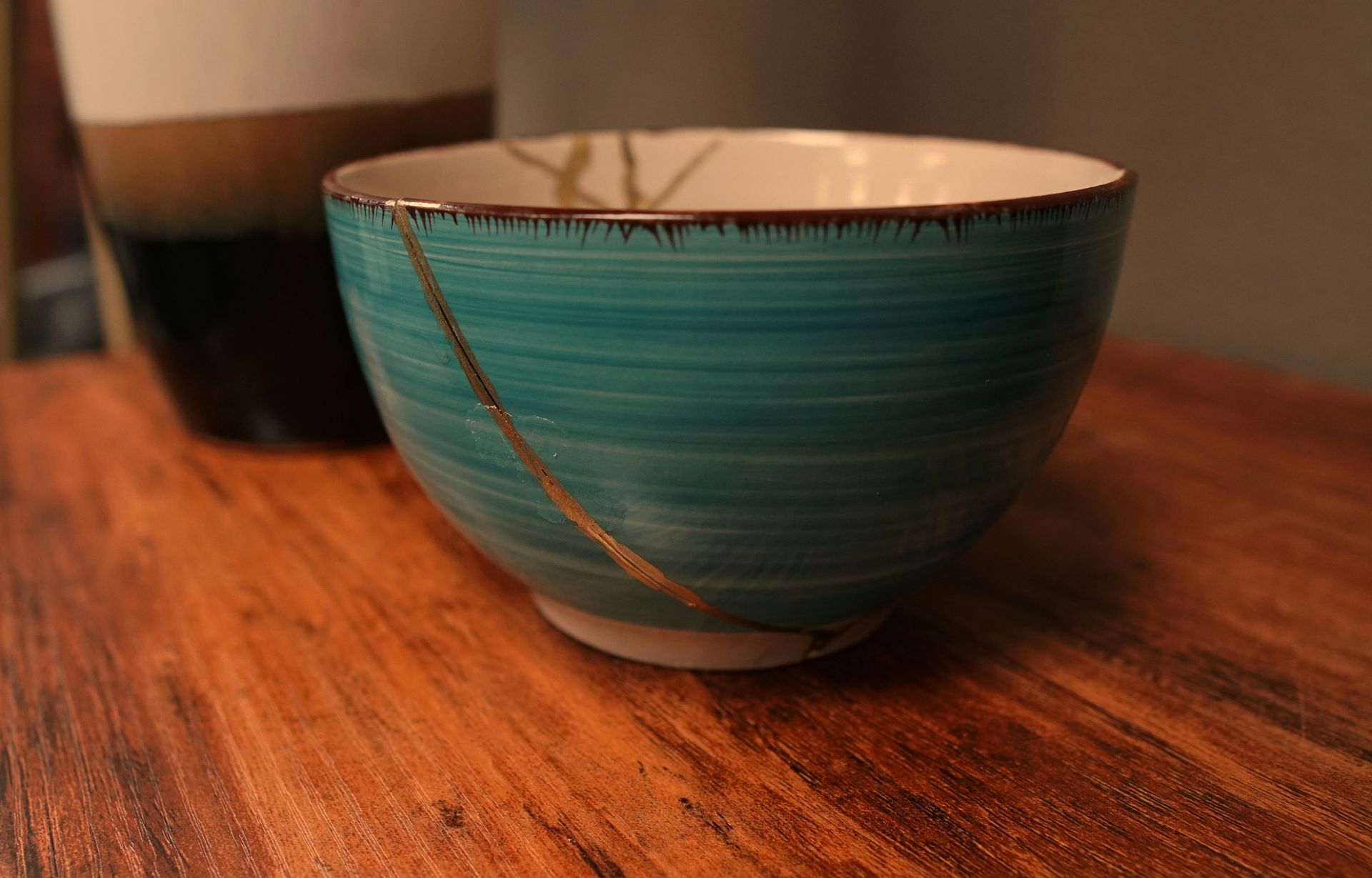
Photo by Matt Perkins on Unsplash
Restoration, then, is not about returning to what was. Nor is it about becoming something entirely new.
The pot, the vase, the person retains its character—the blemishes it has earned, the scratches that come from being used. But it is now bound together differently, and often more strongly.
But sometimes putting something back together just seems like too much.
You’ve been there.
We’ve seen the damage. We’ve felt the loss. The distance between broken and healed seems too great.
Insurmountable.
And in those moments, something Albert Camus wrote gives me hope:
“In the middle of winter, I at last discovered that there was in me an invincible summer.”
We carry our own weather with us.
Not just around us—but within us.
To restore or not to restore—that is the question.
Either way, life will be different.
But if we choose restoration—slowly, imperfectly, through trial and error—we will always discover that something has changed.
It may be deeper. Stronger. More whole. It might be weaker, though, than it was before. Or it may simply be different.
But it will not be the same.
Some things, like our water heater damage, we simply cannot restore on our own.
I finish with these words written to early Christians—from 1 Peter 5:10:
“After you have suffered for a little while,
he will himself restore, support, strengthen, and establish you.”
Like anything of lasting value, restoration may take time, perseverance, and faith.
Things will never be the same—
but a life of abundance doesn’t depend on them being the same.
Does it?
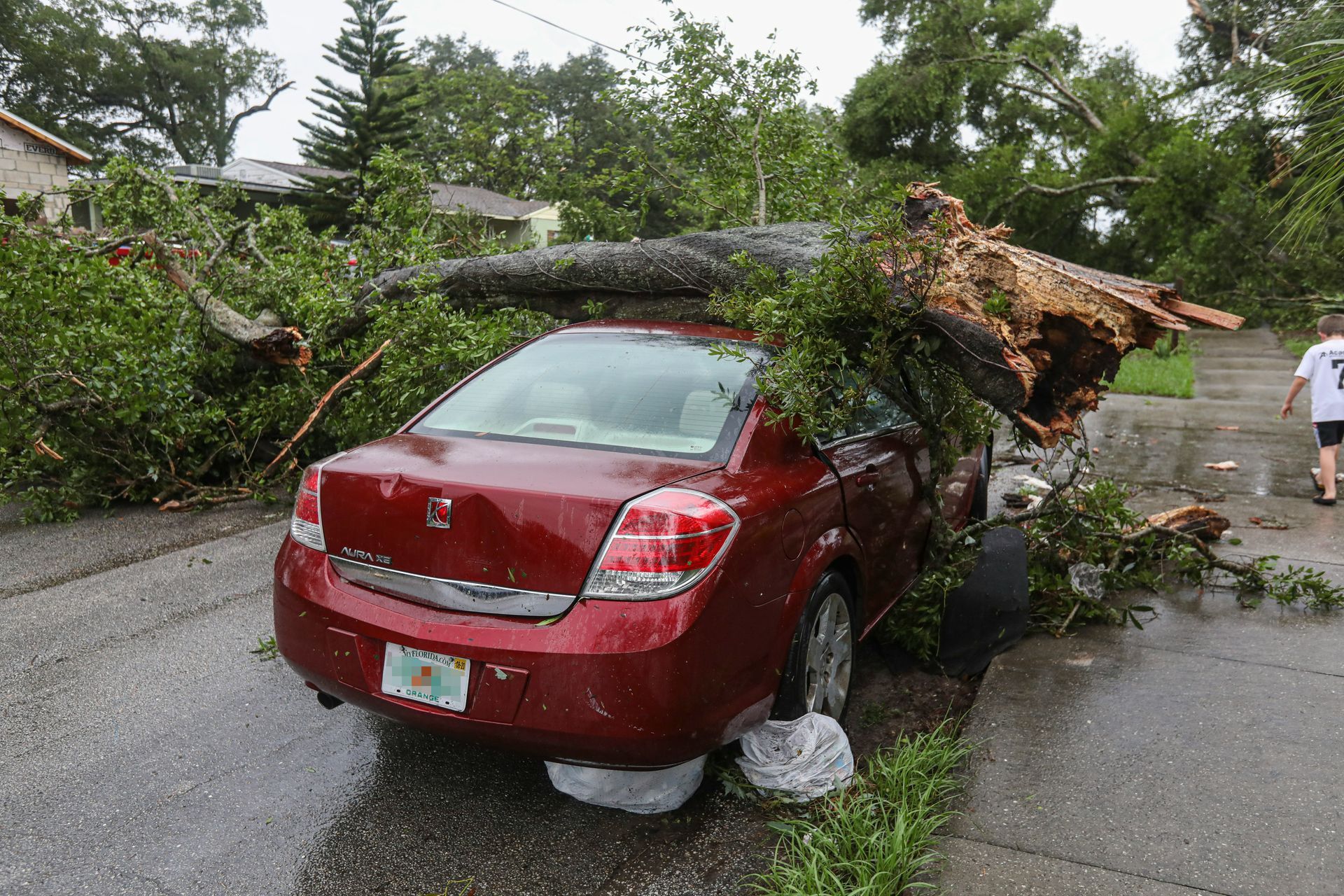
Photo by Mick Haupt on Unsplash
I have a question for you to ponder. If you have thoughts you’d like to share I’d love to read about them
Where in your life are you being called
to move more carefully—
not to break what doesn’t need breaking…
and to trust the slow workof restoring what does?
The best way to leave a comment and to become part of the conversation is to hop over to my Substack, Profound Living with Michael Kroth, where it will be easy to add to and comment on this and future essays.
Here's the link:
Profound Living with Michael Kroth
I'd love to hear your thoughts, experiences, and ideas about this essay or messy elegance.
Restoration, then, is not about returning to what was. Nor is it about becoming something entirely new.
The pot, the vase, the person retains its character—the blemishes it has earned, the scratches that come from being used. But it is now bound together differently, and often more strongly.