When Certainty Collapses
Outcomes are not certain, though some are much more highly predictable than others.

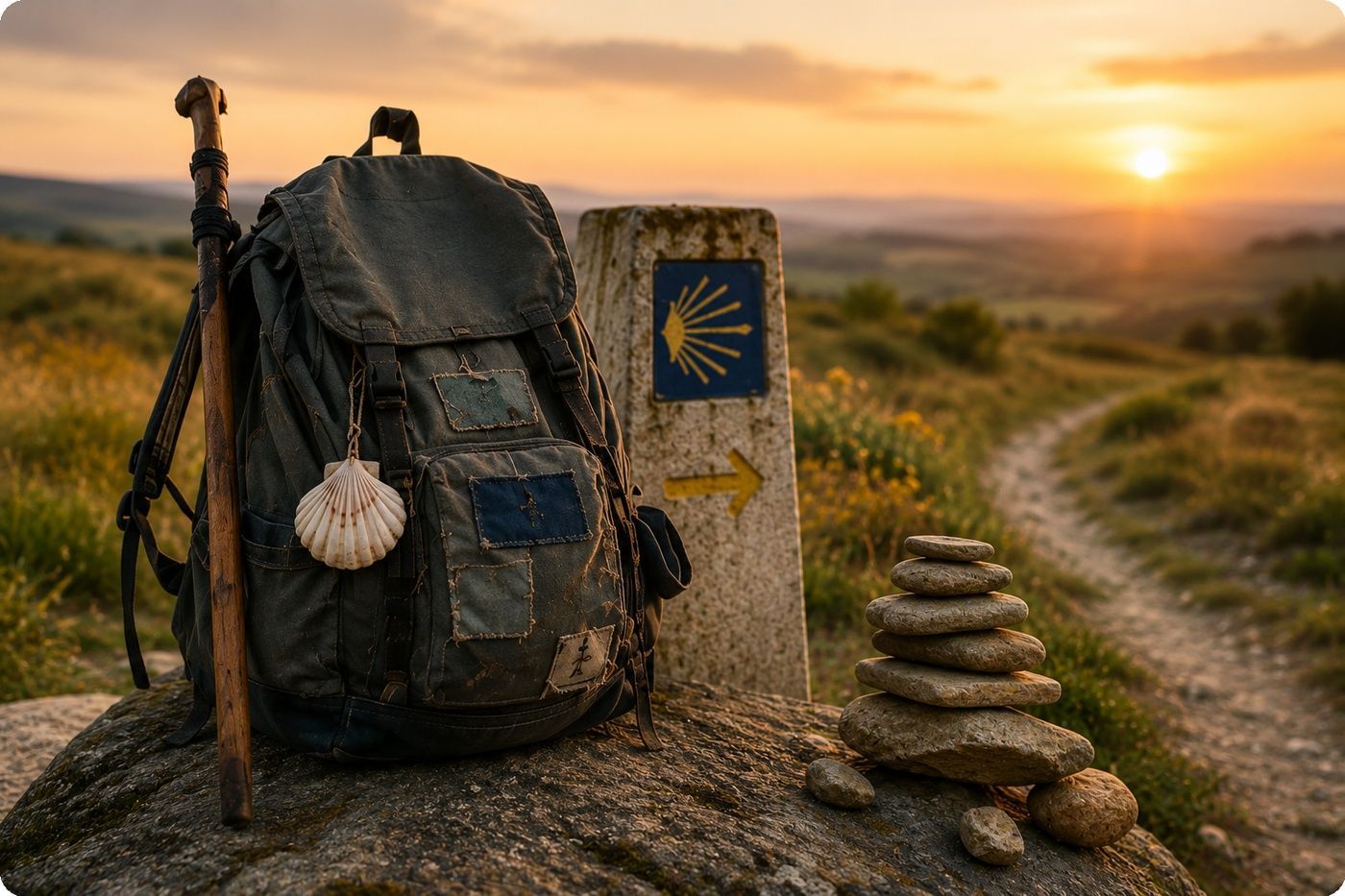
Photo by Blake Cheek on Unsplash
This essay was adapted from a reflection I shared at the Cathedral of the Rockies’ Candlelight Service on March 3, 2026. You can see that reflection here.
I've recorded a video to introduce this essay:
Most weeks at our Candlelight service I light a candle for people (sometimes animals) I want to keep in my heart. When I shared my original reflection on March 3rd about certainty collapsing, I lit my candle for those whose lives have been thrown into uncertainty by war. Not only in places we see in the news, but any places where lives that once felt stable suddenly do not.
During times of war there are so many totally innocent people who find themselves in unpredictable insecurity and loss due to nothing they have done.
Moments like these, these wartimes, bring us back to a deeper question:
What remains when certainty collapses?
When disaster strikes, we suddenly see what really matters and what doesn’t.
Sometimes what feels like the collapse of certainty is actually the beginning of deeper clarity. But we rarely recognize that in the moment. We might be too overwhelmed, maybe fearful of the unknown, and shocked about the unexpected.
Some of you may not remember the collapse of certainty when John F. Kennedy was killed.
I do.
I remember walking home from elementary school along the railroad tracks, crying. Bawling. When my mom opened the door her face was stricken. I’d never seen her in such shock before.
Something had shifted.
More of you will remember the day after September 10, 2001. On September 10 there was the unspoken but doubt-free assumption in this country that we were safe—that we could not be attacked. The next day that certainty vanished.
Airports changed.
Security changed.
Our assumptions about the world changed.
Certainty became uncertainty overnight.
Moments like these reveal something deeper: how fragile our certainties really are. And they raise a question that eventually touches all of us:
What remains when certainty collapses?
We see then that the rocks beneath our feet are not as stable as we thought.
Young people these days speak openly about collapse. Climate instability, political volatility, economic fragility, institutional distrust, structures that were once assumed stable now feel provisional. And so I wonder, and I actually think, that one of the main reasons people are turning to spirituality, young people in particular, is because of this deep uncertainty in what all the world trusted without much thought. Our institutions, our media, our role models, suddenly seem more like shifting sand than solid rock.
On what rocks can we stand? Are there any?
Collapse for example can test the certainty of religion. But is religion certain to start with?
Paul Tillich once wrote something striking about faith:
“Faith is certain in so far as it is an experience of the holy. But faith is uncertain in so far as the infinite to which it is related is received by a finite human being… To accept this is courage.”
In other words, uncertainty is not the opposite of faith. It is built into faith.
The scientist Carl Sagan made an observation which complements Tillich’s. He wrote,
“A general problem with much of Western theology… is that the God portrayed is too small.”
God, he was suggesting, if one believes in God (he didn’t), should be considered much more vastly than simply a God of our planet. If our vision of God doesn’t go beyond our own Earth-centric denominations or traditions to include all of infinity, how certain can it be?
Reality is larger than we can imagine. Over decades, centuries, millions of years - heck, even within a week - what we think is true, isn’t. Will my church still be standing a thousand years from now? A million years from now, will there even be people living on our planet? We can pretty much bet that countries, religions, cultures - just about everything that we count as certain these days, will be much different.
Outcomes are not certain, though some are much more highly predictable than others.
If scientists accept the mystery of the universe, then religion, as this clip from the movie Conclave suggests, must be careful to make sure that certainty doesn’t take the mystery out of the church. In this video, Ralph Fiennes plays the dean of the College of Cardinals, responsible for guiding the election of a new pope. Here he speaks to the the cardinals assembled, about doubt, certainty, and mystery.
Cardinal Lawrence on Doubt and Certainty
So is there room for mystery in religion? Scientists revel in exploring the mystery of the universe, and mystery, by definition, is uncertain.
Uncertainty, certainty, doubt, mystery, exploration, learning - they’re all part of the process of - if we will do it - going more deeply in thought, spirit, and action.
And uncertainty is a space where listening, humility, and discernment can occur.
This all goes well beyond the institution of religion, of course. There are many kinds of uncertainty in the world. For example, there is:
food insecurity
housing insecurity
medical insecurity
and the uncertainty created by war and conflict
That brings us back again to that deeper question:
What remains when certainty collapses?
Sometimes what looks like collapse is actually transition.
A job ends. New jobs open up.
A relationship changes. We meet new people.
A plan we counted on falls apart. A new plan emerges.
Only later do we realize that the very thing we thought was the end was really the beginning of the next chapter. The universe seems to move through cycles of release and renewal. Cycles of seasons and death and rebirth and restarting occur in our natural world. What looks messy on the surface may actually be part of a deeper elegance. Maybe there is some composting going on in our lives we didn't expect.
Hasidic Rabbi Menachem Mendel Schneerson said that in times of upheaval, “,,,we need, more than ever, our absolute spiritual foundation…even in our most difficult moments,” he wrote, “our purpose never waivers, this helps us to find our way when all the familiar signposts have vanished.”
Of course, if our deepest selves have never been explored, then what do we have? Uncertainty opens the door for this inner work.
The Rabbi says that faith is the answer to all the difficult questions of uncertainty. Faith “in a higher purpose, a more perfect form of justice than human institutions are capable of,” he said. And he talks about what he thinks faith does. It “infuses us with the certainty, will, and resolve that good can overcome indifference and evil.”
“Life is a process,” he says, “that leads to redemption, a process in which loss leads to renewal, suffering to growth, and death to rebirth.”
That sounds a lot like the process of resurrection we see in Holy Week. And seems quite similar to the environmental and universal cycles of collapse, reformation, into new and - if it’s working well - deeper transformation.
What do we have when certainty collapses?
At the very least, we have us. We have access to the deep purposes of our life. Too, we have the natural cycles of formation, deformation, and reformation. We have agency - the ability to make decisions, even when the situation is constraining. And we have the present moment. We have right now. For everyone, spiritual or not, wealthy or not, in the middle of a war or lining up for lemonade at the country fair, we have this moment. This elegant, once-in-a-lifetime moment. And the opportunity to choose how we will use it. And how we can step through the mess, step into our purpose, and what we will do next.
That is the strange and beautiful pattern of Messy Elegance.
A question to start the conversation
Have there been times in your life or observations, when the loss of certainty led to something deeper, or more joyful, or more meaningful in your life? Can you share what made that possible?
The best way to leave a comment and to become part of the conversation is to hop over to my Substack, Profound Living with Michael Kroth, where it will be easy to add to and comment on this and future essays.
Here's the link:
Profound Living with Michael Kroth
I'd love to hear your thoughts, experiences, and ideas about this essay or messy elegance.
What do we have when certainty collapses?