
The Imitation Of Christ V
Michael Kroth • February 28, 2020
Embrace The Sacraments

When is the last time you used the word, “sacrament”? Seriously. I can say with a good deal of confidence that the word does not enter my casual conversation and, unless we are celebrating communion or a baptism in a church service, it’s not a word I use or hear used much around the church.
The United Methodist Church (UMC) recognizes two sacraments - baptism and communion. Why these and not others? Why not marriage or ordination, for example? The UMC says, “These two acts have a special place in the church because Jesus commanded them and participated in them”. The UMC does support other “sacramental acts”, “rites and rituals” such as marriage and ordination, and also confession, confirmation, and blessing the dying and those grieving.
Catholics have seven sacraments: Baptism, Confirmation, the Eucharist (these are considered the sacraments of initiation; Penance and Reconciliation, Anointing of the Sick (the sacraments of healing); and the sacraments of service, Holy Orders and Matrimony. As a casual observer, it seems to me that Catholics spend a good deal of time and attention to learning about and celebrating these sacraments. One reason I enjoy attending a Catholic Mass is the foreknowledge that I will be participating in the Eucharist, which is similar to what we at the UMC call communion.
One reason I enjoy participating in our UMC communion is that everyone can participate. “All Means All”, in our church. In contrast, only Catholics can take the bread and wine in a Catholic mass, though people like me can receive a blessing.
I’m not a priest or an ordained minister so my knowledge of the sacraments stops about here. I will say, with authority, that these rituals mean a great deal to me. I feel incredibly fortunate to have discovered Catholicism and to participate and to learn from this faith tradition. This, in turn, has enriched my engagement and also my commitment to my own church and its sacraments, rites, and rituals. But, perhaps even more, I have an eagerness to learn about and to participate in these kinds of traditions and observances outside Christianity or organized religion at all.
To me, and it took me a long time to work through this, these sacraments and rituals are portals to the divine. They are sacred in themselves, but – to me anyway – the sacraments are a means, just as religious organizations are means, and not ends. The ends are all related to, provide a structure for, and are intended to connect more closely with, one’s direct relationship to the divine.
The Oxford English Dictionary, as it almost always does, has an extensive history of the usage and definitions of the word “sacrament”. Briefly, here are some:
- Ecclesiastical. Used as the common name for certain solemn ceremonies or religious acts belonging to the institutions of the Christian church.
- The Lord's Supper, Eucharist or Holy Communion. Often called the sacrament
- A mystery; something secret or having a secret meaning. of the altar, the Blessed Sacrament, and (esp. formerly) the Holy Sacrament. to receive, take the sacrament, to communicate.
- sacrament of the present moment, any and every moment regarded as an opportunity for the reception of divine grace.
- The consecrated elements, esp. the bread or Host.
- Something likened to the recognized sacraments, as having a sacred character or function; a sacred seal set upon some part of man's life; the pledge of a covenant between God and man
I have spent a fair amount of time thinking about presence, and “the sacrament of the present moment”, as de Caussade and others have described it. (See Practicing Presence – Overview and Presence – Four Perspectives)
For me, embracing the “sacrament of the present moment”, as de Caussade, (see also Richard Rohr) describes this, is an essential practice in my life. It avoids intermediary words and actions and other people – anything between me and depth of…well, the depth and the presence of something beyond me.
Integrating the “official” sacraments of the church is also essential in my life. They honor and connect me with the divine in a more formal way. They are the scaffolding that allows the journey to occur. They are the habits, routines, and practices that put us regularly into the presence of what is holy. They build and buttress our volition in a world that distracts us with superficiality. They are sacred, especially in the sense of “To hallow, bless, sanctify, make holy”.
The entire last part of the The Imitation
(Book IV) is “Of the Blessed Sacrament”. But this is not the easiest part of what this little devotional book asks of me. I wrote in my journal on 12/27/16, as I was starting to read this last part of the book, “As I have been reading the sacraments I notice I am not resonating nearly so much as with the themes of poverty, humility, and so forth. I have a long way to go, it appears….”
And I still do. A long way.
And yet, my last entry, as I finished the book, was to “reread these last two chapters often”. The last chapter, in particular, reminded me that I don’t have to know everything. The last sentence in the book is, “If the works of God were such as might be easily comprehended by human reason, they could not be called wonderful or unspeakable”.
Now that is good to hold on to.
The sacraments give me, and perhaps you, something that is familiar and a process that I can count on to bring me closer to God. They are a consistent reminder to follow the great commandments. They are solid and dependable, immerse us the vast and rich, unknown mystery, and are means to regularly connect us to depth in what can often be seen as a superficial and undependable world.
Sources:
Catholic Church. (1997). Catechism of the Catholic Church (2nd ed.). New York: Doubleday.
Caussade, J. P. d. (1982). The sacrament of the present moment
(1st Harper & Row pbk. ed.). San Francisco: Harper & Row.
à Kempis, T. (2013). The Imitation of Christ
(R. Challoner, Trans.). Charlotte, N.C.: Tan Books & Pub.
"sacrament, n." OED Online. Oxford University Press, December 2019. Web. 28 February 2020.
"sacre, v.1." OED Online. Oxford University Press, December 2019. Web. 28 February 2020.
United Methodist Sacraments, Rites, and Rituals, https://www.umc.org/en/content/united-methodist-sacraments-rites-and-rituals
Photo Credit
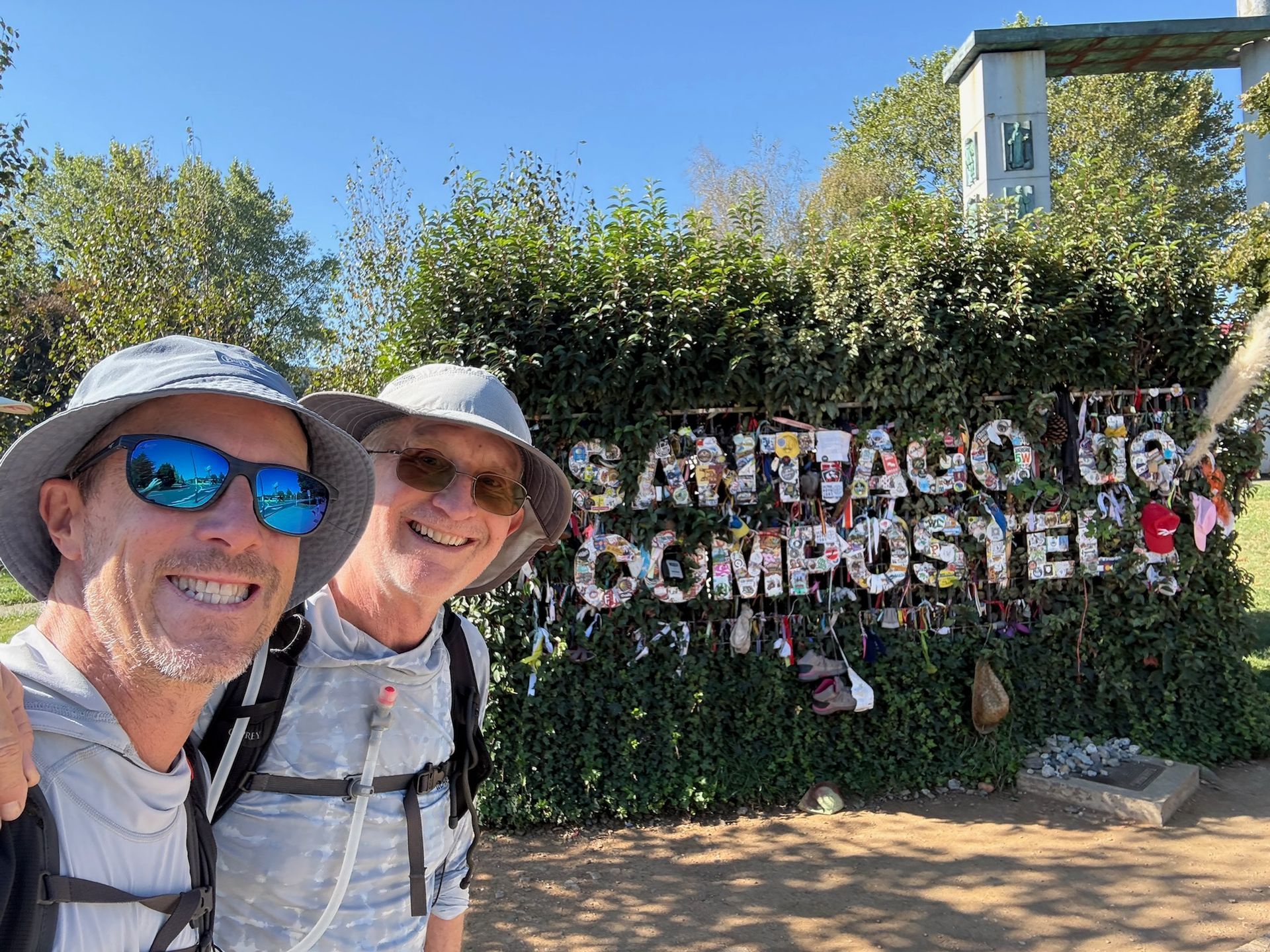
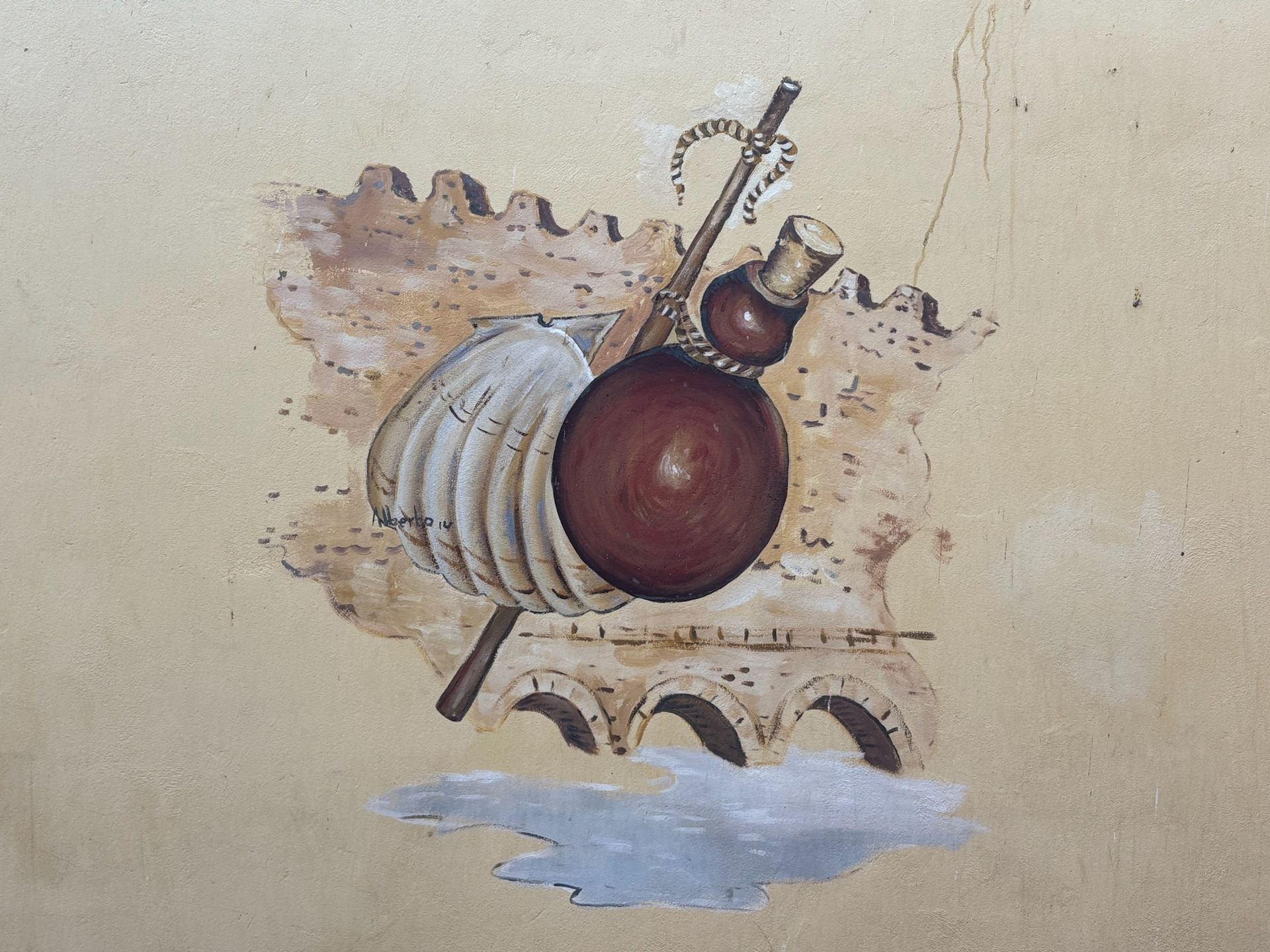
Photo by Michael Kroth

"Looking back, I realized that little patch of shade beneath the tree became much more than a resting place. It became a waypoint—a place where I had to stop, get my bearings, and face the possibility that I might not be able to keep going on my own."
If “expensive” were one of the principal attributes of what it means to be elegant then most of the world could never experience elegance. But anyone can, it turns out.

"I must conclude again that no one — at least no one I know of — has become whole. At best, they have become 'wholer.' More whole." Also, an invitation to a Messy Elegance Project conversation
What I've Learned Since Defining Elegance with the Help of Flipboard and AI Also, an invitation to a Messy Elegance Project conversation

Messy Elegance is a process, not a thing and how a workshop started this whole messy elegance idea
